If your boiler pressure keeps dropping, it can be worrying as well as inconvenient. You might notice your heating cutting out, error codes flashing on your boiler display, or find yourself constantly topping up the system. These are all signs that something isn’t quite right with your boiler’s pressure. Understanding the common causes can help you identify the issue early and avoid costly repairs or a cold home.
In this guide, we’ll explain why boiler pressure drops, what you can safely check yourself, and when to call a professional for help.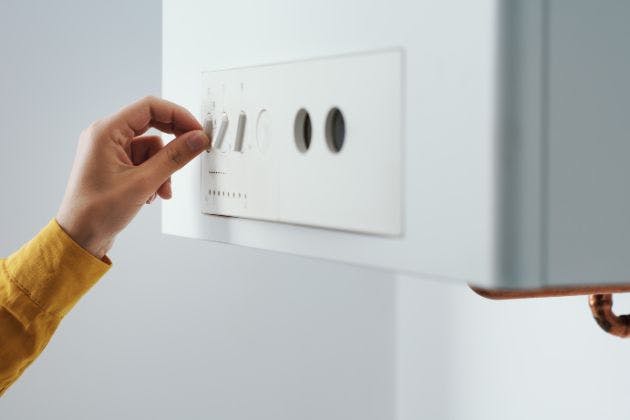
What causes boiler pressure to keep dropping?
Modern sealed systems rely on the right amount of water and air inside the pipework. If the pressure does not stay in the normal range, something is letting water out or not coping with expansion.
The most common reasons boiler pressure keeps falling include:
Small leaks on pipes, radiators, valves or joints
Recently bled radiators without topping the pressure back up
Faulty pressure relief valve (PRV) letting water escape
Expansion vessel problems, so the system cannot absorb expansion
Often, the boiler itself is not the only culprit. The issue might be somewhere on the wider heating system that a Gas Safe engineer will need to track down.
Is it dangerous if the boiler pressure keeps dropping?
Low pressure on its own is usually not dangerous. Most boilers simply shut down to protect themselves, which is why your heating or hot water may stop working.
However, there are warning signs where you should stop using the boiler and call a professional immediately. These include water near electrics, burning smells, or any smell of gas in your home.
Never remove or open your boiler's case. In the UK, only Gas Safe registered engineers are legally allowed to work inside the boiler on gas components.
How to read your boiler pressure gauge
Before you do anything else, look at the pressure gauge on your boiler. On most combination and system boilers, this is on the front panel and shows the pressure in bar.
When the system is cold, the normal range is usually around 1.0 to 1.5 bar. With the heating on and the system hot, it may rise up to around 2 bar. Check your boiler manual for the correct range for your model.
If the gauge is below 1 bar when cold, the pressure is low. If it drops back down shortly after you top it up, there is likely an underlying fault that needs attention.
Safe checks you can do yourself
There are a few simple checks most homeowners in Bradford and Leeds can carry out safely without touching the internal parts of the boiler. If you feel unsure at any point, stop and call a professional.
Look for small leaks around radiators and valves
Walk around your home and inspect radiators, visible pipework and valves. You are looking for any sign of water escaping from the system, even slow drips.
Check for green or white crusty marks on joints, damp patches on carpets or flooring under pipes, and staining on ceilings under upstairs pipe runs. Even a tiny leak can slowly drop the pressure over time.
Check the pressure relief valve discharge pipe
Your boiler has a safety device called a pressure relief valve (PRV) that lets water out if the pressure gets too high. This water normally exits through a small copper pipe that runs outside.
Find the pipe that comes through the outside wall near your boiler and look for signs of dripping or staining on the wall. If water is regularly coming out of this pipe, the PRV may be passing and will need attention from an engineer.
Have you bled your radiators recently?
Bleeding radiators releases trapped air, which can improve heating performance. However, each time you bleed a radiator, you also release some system pressure.
If you have recently bled several radiators and then noticed low pressure, that may explain it. In this case, a one-off top-up may be all that is needed, provided the pressure then holds steady.
Can I top the boiler up every week?
Most sealed systems allow you to repressurise using a filling loop. It is generally safe to top up occasionally if the system very slowly loses pressure over months, and the boiler manual confirms it is normal.
If you find yourself topping up every week, or even every few days, that is not normal. Regularly adding fresh water can introduce oxygen into the system, leading to corrosion, sludge and more serious problems later on.
Repeated top-ups are a sign that you should book a proper diagnosis rather than treating the symptom. An engineer can check for leaks, test the PRV and assess the expansion vessel.
How to repressurise safely (if your manual says you can)
Every boiler is slightly different, so always follow the instructions in your boiler manual. If at any point the instructions do not match what you see, stop and contact a professional.
Very broadly, the repressurising process involves:
Switching the boiler off and allowing it to cool
Finding the filling loop (usually a silver flexible hose or built-in lever)
Slowly opening the valves until the gauge reaches around 1.0 to 1.5 bar
Closing the valves firmly and turning the boiler back on
Never leave the filling loop open, and never raise the pressure over the recommended cold level in the manual. If the pressure drops back down quickly after you top up, do not keep repeating the process. Call a Gas Safe engineer instead.
When you must not attempt any fixes yourself
There are clear safety boundaries that should not be crossed by homeowners. If any of the following apply, switch the boiler off, do not touch it further and call an engineer:
You can safely check the external gauge, visible pipework and outside discharge pipe, but you must not open the boiler case, adjust internal components or reset safety devices yourself.
Preventing boiler pressure problems from coming back
Once the immediate issue has been sorted, it is worth thinking about prevention. Keeping the system in good condition helps your boiler hold steady pressure and run efficiently.
Regular boiler servicing helps pick up issues such as failing expansion vessels or PRVs before they turn into constant pressure loss. Inhibitor chemicals can be added to the system to reduce corrosion and sludge, which also protects key components.
It is also sensible to glance at the pressure gauge every few weeks, especially at the start and end of the heating season. Spotting a slow drop early can make repairs simpler and cheaper.
Need a boiler pressure fault checked in Bradford or Leeds?
If your boiler pressure keeps dropping and you are in the Bradford or Leeds area, it is time to get it checked properly. Ongoing pressure loss is a sign that something is not right and home top ups will only mask the issue for so long.
KSM Plumbing Ltd can diagnose leaks, faulty PRVs and expansion vessel problems, then carry out safe, lasting repairs. To book a fault diagnosis, visit our Boiler Repair page or arrange routine maintenance through our Boiler Service page.
If you prefer to speak to someone, call KSM Plumbing Ltd on 07704373410 and we will be happy to help.